Table Of Content
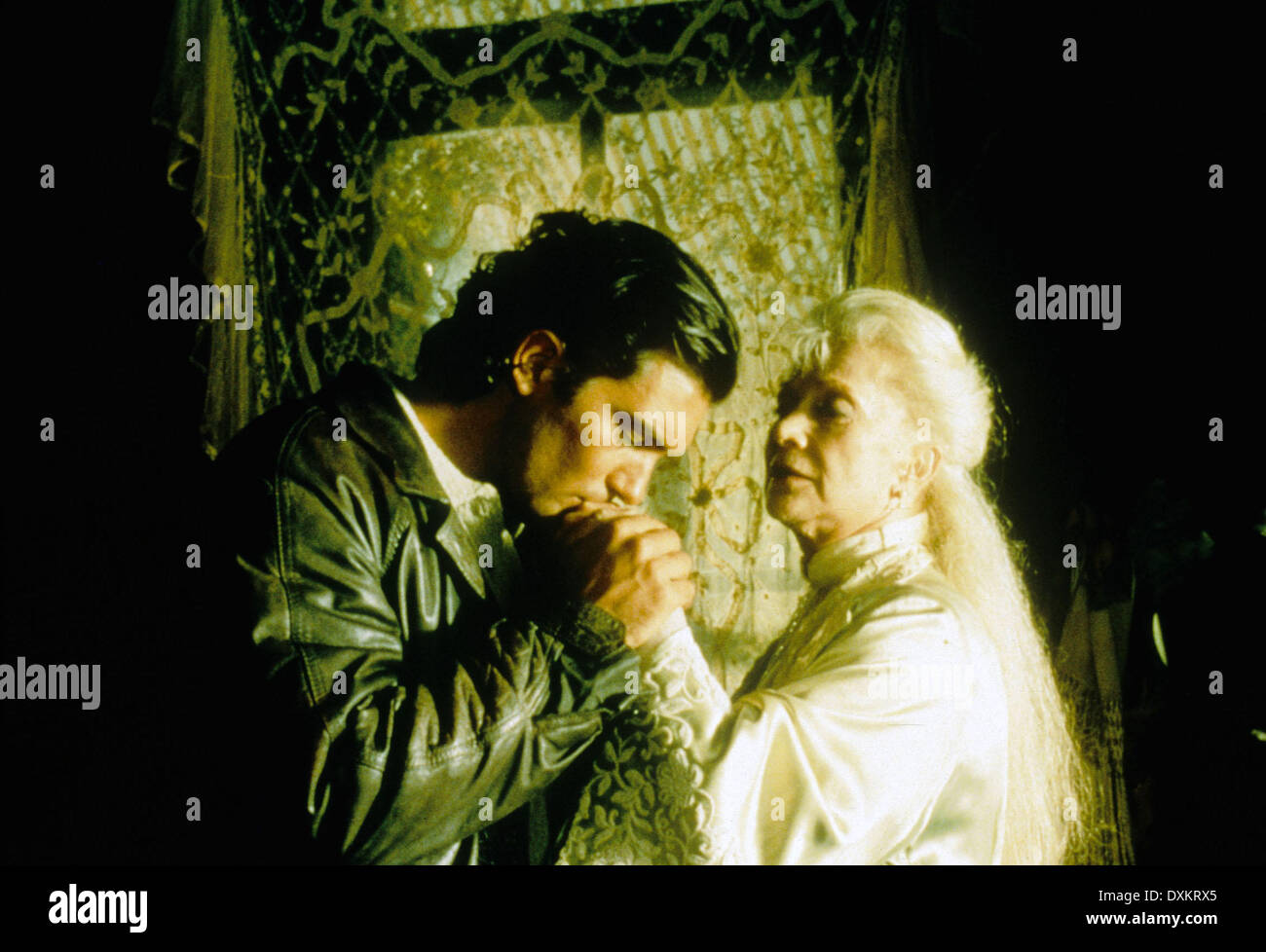
Using an unnamed country in the novel, but easily recognizable as Allende’s homeland of Chile, The House of the Spirits examines the social changes and governmental actions leading to the development of the country’s dictatorship. From the feminist changes advocated by Nívea to the communist government preceding the military takeover and vehemently despised by Esteban, the novel presents a segment of the history of the author’s country. The book’s primary vehicle for that historical progression is Esteban Trueba, who unifies the various generations of women presented. He marries Nívea’s daughter Clara, having first loved and lost her other daughter; he provides his daughter Blanca with somewhat dubious parenting; and he protects and loves his granddaughter, Alba. Alba, however, breaks the cycle of hatred and revenge perpetuated by Esteban García.
Love in the Time of Cholera
Guests can roam around the mansion at will, with a themed cocktail in hand, during an evening of magic, séances, specters, live music, secret games, and more. Sign up to unlock our digital magazines and also receive the latest news, events, offers and partner promotions. Esteban catches Pedro preaching revolutionary ideas that are critical of wealthy landowners like him to the peasant workers. That night at dinner, Clara and Blanca see a vision of Férula while having dinner. Realizing Férula has died, Clara drives into town to find Férula dead in her modest home. In a moment alone with Férula, Clara tells her how much she and Blanca miss her, and how proud she would be of Blanca.
The House of the Spirits: Characters
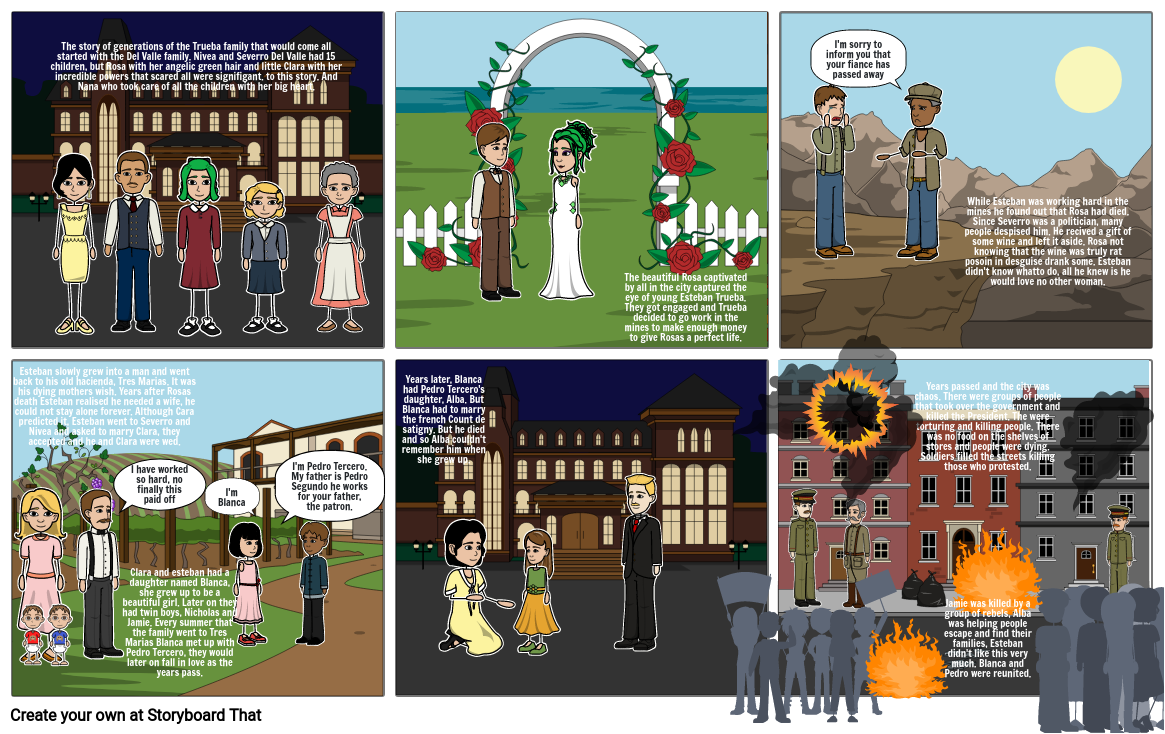
Through a combination of intimidation and reward, he enforces respect and labor from the fearful peasants and turns Tres Marías into a "model hacienda". He turns the first peasant who spoke to him upon arrival, Pedro Segundo, into his foreman, who quickly becomes the closest thing that Trueba ever has to an actual friend during his life. He rapes many of the peasant women and children, and his first victim, then 15 year old Pancha García, becomes the mother of his bastard son, Esteban García.
Genius is the world’s biggest collection of song lyrics and musical knowledge
He becomes isolated from every member of his family except for little Alba, whom he is very fond of. Esteban runs as a senator for the Conservative Party but is nervous about whether or not he will win. Clara speaks to him, through signs, informing him that "those who have always won will win again" – this becomes his motto.
Destination Spirits: This Private Irish Farmhouse Distills A Gin With Local Flavor - Forbes
Destination Spirits: This Private Irish Farmhouse Distills A Gin With Local Flavor.
Posted: Mon, 18 Sep 2023 07:00:00 GMT [source]
Though she contemplates the pleasures of “getting even” with her torturers, she finally concludes that any revenge would result in yet another generation of violent abuse, torture, and rape. Having returned to her grandfather’s house, the eponymous house of the title, Alba explores the notebooks of her grandmother Clara and turns to her own writing. At the end of the novel, Alba finds herself pregnant with a child that could be Miguel’s but is just as likely to be the product of the rapes she endured as a prisoner. Clara (one of its translations is the equivalent of English "clear", although it is also a common female name) is the key female figure in the novel. She is a clairvoyant and telekinetic who is rarely attentive to domestic tasks, but she holds her family together with her love for them and her uncanny predictions.
Severo and Nívea del Valle
Esteban throws Férula out of the house when he catches her and Clara asleep in the same bed. Esteban uses the gold he found from mining to buy a hacienda, Tres Marías. He employs natives to work as peasants on the dilapidated land, eventually turning Tres Marías into a successful estate through his use of brute force. One day while horseback riding through the countryside, he sees a peasant girl, Pancha García.

House of Spirits: A Haunted Cocktail Soiree returns for Halloween 2022
Alba (Spanish for "Dawn," Latin for "white") is the daughter of Blanca and Pedro Tercero García, although for many years of her life she was led to believe that Count de Satigny was her father. From before her birth, her grandmother Clara decreed that she was blessed by the stars. Because of this, Clara said she didn't need to go to school; as a result, Alba was raised at home until she was seven.
More books from this author: Isabel Allende
He also spends nights with Tránsito, a local prostitute to whom he lends money so she can start a new career in the capital. Their platonic, familial love, however, is not the only passion portrayed in the novel; sexual, romantic love also abounds. The book proceeds through its several generations of women with reflective names, from Nívea to her daughters Rosa and Clara to Clara’s daughter Blanca and finally to Alba, with an examination of the rewards and difficulties of passion. She has famously stated that The House of the Spirits began as a letter to her grandfather, and the book does encapsulate elements of her own family. Allende’s writing quickly turned from an epistolary form to imaginative fiction. Indeed, though many of the characters are based on members of Allende’s family, they do not represent the reality of those people.
Brief Biography of Isabel Allende
Esteban immediately goes to work fixing up the main house, rebuilding the barns, and planting the fields. Directing the peasants, Esteban laughs at the idea of “class struggle”—he believes the peasants are lost without a strong patrón like him to guide them. Esteban builds a schoolhouse and a general store, and he even builds brick houses for the peasants, which is unheard of on other estates. Esteban feels that he needs a woman, so he rapes a peasant girl named Pancha García. After this, he is so busy working and raping other peasant women that he is the last to notice Pancha’s pregnancy. Many peasant women claim that Esteban has fathered their children, but he doesn’t believe them.
Esteban hates Pedro Tercero, who plays a guitar and sings songs of revolution, but Blanca sneaks out her window every night to meet him. A Frenchman named Jean de Satigny comes to stay at Tres Marías and notices Blanca immediately. He follows Blanca when she sneaks out to meet Pedro Tercero and finds them making love by the river. Jean goes directly to Esteban, who jumps on his horse and meets Blanca halfway home. He violently beats Blanca, and when Clara objects, Esteban knocks out Clara’s teeth.
The novel ends with Esteban's death, and Alba sits alone in the vast Trueba mansion beside his body. The last paragraph reveals that she is pregnant, although she does not know (or care) whether the child is Miguel's or the product of the rapes that she endured at the hands of security police, during her imprisonment. The story is told mainly from the perspective of two protagonists (Esteban and Alba) and incorporates elements of magical realism.
What matters is that the child is her daughter; Alba also know it’s important to record her experiences in her own notebook, so that others will know her story as well. Severo (literally, "severe") and Nívea ("snowy") are the parents of Rosa, Clara, and several other children. Severo's candidacy for the Liberal Party of Chile promptly came to an end after someone tried to poison him, but killed his daughter Rosa instead. Nívea, however, would come to become a prominent social activist for women's liberation.


No comments:
Post a Comment